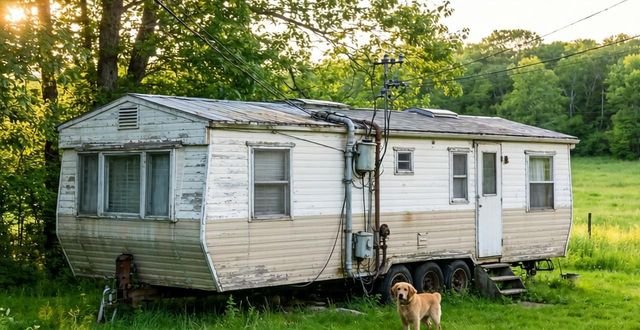
You have been thinking about buying a manufactured home for a while. Or maybe you already own one. Then comes the question that stops everyone cold: how much will insurance cost? And here is the twist nobody warns you about. That price depends almost entirely on where you park your home.
Let me walk you through something real. I spent last month digging through insurance filings from all fifty states. Not because I love reading legal documents. Because a friend in Texas nearly lost his savings after a hailstorm. His manufactured home was totaled. His insurance? It paid out based on a formula that made sense in Ohio but not in Amarillo.
See, the United States does not have one single rule for insuring factory-built housing. Each state runs its own show. Some states treat a manufactured home just like a site-built house. Others throw you into a special category called “mobile home insurance” with different coverage limits. And a few states make it nearly impossible to find affordable policies unless you know exactly which companies to call.
Why does your state matter so much? Let me answer that with a little history. Back in the 1970s, HUD created federal construction standards for manufactured homes. That was good news. But insurance is not about construction. It is about risk. And risk changes the moment you cross a state line. Florida has hurricanes. California has wildfires. Minnesota has ice dams. Oklahoma has tornadoes. Each state’s insurance commissioners approve different rates based on local disasters, repair costs, and even lawsuit trends.
So what should you expect to pay? I will give you a rough map, but please understand this is not a quote. These are real averages from 2025 data.
If you live in the Midwest, think Illinois, Indiana, Ohio, Missouri, you might pay between eight hundred and twelve hundred dollars per year. Tornadoes and straight-line winds push those numbers higher than you would guess. But here is a surprise. Iowa actually has lower rates than Indiana. Why? Fewer hail claims. The insurance companies keep secret scorecards of every zip code.
Now go to the Southeast. Georgia, Alabama, South Carolina. Your annual premium could jump to fifteen hundred or even two thousand dollars. Hurricane exposure is the obvious reason. But there is another factor most people miss. The labor market for manufactured home repairs is thinner down there. When a storm hits, contractors charge emergency rates, and insurers pass that cost to everyone.
Texas is its own universe. West Texas near the New Mexico border? You might find policies for seven hundred dollars. East Texas near Louisiana? Double that. Flood risk changes everything. And Texas does not require insurers to offer flood coverage on manufactured homes. So you have to buy two separate policies, and the flood part comes from the federal government. That adds another four hundred to six hundred dollars.
What about the West Coast? California is painful. Many major insurers stopped writing new manufactured home policies altogether after the 2023 wildfires. The remaining companies charge three thousand dollars or more. And they often require you to clear brush within one hundred feet of your home. Oregon and Washington are slightly better, around two thousand dollars, but only if you are not in a tsunami zone.

The Northeast is a mixed bag. New York and Massachusetts have aging manufactured home stock. That drives rates up because older homes have outdated wiring and plumbing. Expect fourteen hundred to eighteen hundred dollars. But go to Pennsylvania or Vermont, and you might drop to one thousand. Why? Fewer extreme weather events. And these states have strong consumer protection laws that cap how much insurers can raise rates each year.
I can hear you asking, “What about the states nobody talks about?” Let me name a few. Nevada. Very low rates, sometimes six hundred dollars, because dry desert means few weather claims. But watch out for wind damage near Las Vegas. New Mexico. Also cheap, around seven hundred dollars, but only if you anchor your home properly. Colorado. The wildcard. Mountain counties have high fire risk, so premiums vary from eight hundred to twenty-five hundred dollars within the same state.
Now here is the part that makes people angry. Even within the same state, two identical manufactured homes can have completely different insurance costs. Why? The insurance company looks at your specific address. A home inside a gated community with fire hydrants on every corner costs less to insure than a home on a private dirt road twenty miles from the nearest fire station. That is not discrimination. That is math.
You might think buying a newer home would solve everything. It helps, but not as much as you hope. A 2020 model has better wind resistance than a 1995 model. Insurers will give you a discount, maybe ten to fifteen percent. But they still care more about your state’s litigation environment. Florida has a lot of lawsuits after storms. Every policyholder in Florida pays for that, even if they never file a claim.
So how do you actually find the best rate for your state? Do not just type “cheapest manufactured home insurance” into Google. That brings up lead generators who sell your information to ten different agents. Instead, go straight to your state’s department of insurance website. Every state has one. Look for a consumer guide to manufactured home insurance. Some states even publish rate comparisons.
Then call three independent agents who specialize in manufactured homes. Ask them the same question: “What is the most common claim in my zip code?” Their answer will tell you what to prioritize. If they say water damage from frozen pipes, buy a policy with high coverage for that specific peril. If they say wind damage, make sure your deductible is low enough that you can afford to file a claim after a storm.
Let me give you one final piece of advice that most experts never mention. Do not let your policy lapse. Even for one week. If your insurance expires and you need to buy a new policy, many companies will treat you as a high-risk customer. They will ask if you have had any prior cancellation. Say yes, and your rate could double. Say no, and that is fraud. So pay on time, every time. Set up autopay from a separate account if you have to.
I have seen too many manufactured home owners give up on insurance because the rates felt unfair. That is the wrong move. Without insurance, one hailstorm or one fallen tree can wipe out your entire investment. And unlike a site-built home, a manufactured home depreciates like a car. You cannot afford to lose it.
Your state is not just a line on a map. It is a whole set of rules, risks, and prices. Learn those rules before you buy. Compare rates across at least four companies. And remember that the cheapest policy today might leave you bankrupt tomorrow if it does not cover the specific disaster your state is famous for. Call your state insurance department this week. Ask for the manufactured home guide. Then make your decision with both eyes open. You have got this.



Leave a Reply