So you just bought a boat, and suddenly everyone’s telling you to “insure it like your car.” But here’s the catch: boat insurance isn’t one‑size‑fits‑all. What works in Florida might sink you in California. I learned this the hard way after moving my little center console from Texas to North Carolina. Rates jumped, coverage changed, and I had to start from scratch.
Let’s talk real states and real insurers. Because your neighbor’s recommendation in Michigan probably won’t help you in Alabama.
Take Florida first. Hurricane alley, saltwater corrosion, and a million other boaters on the water. Down here, BoatUS (which runs on Geico’s marine underwriting) dominates. Why? They actually cover towing after a breakdown, not just collision. I’ve seen friends stranded near the Keys, and a $600 tow bill is no joke. Progressive is another big name in Florida, especially for older boats or first‑time owners. But here’s a local secret: many Florida captains swear by Markel. They write policies that include “diminishing deductible” – every claim‑free year knocks off 10%. That adds up fast when you’re navigating the ICW every weekend.
Now head over to California. Different beast entirely. You’ve got inland lakes, the Delta,and the Pacific coastline, each with its own risk profile. For saltwater runs out of San Diego or Santa Barbara, Allstate’s marine division is surprisingly strong. They offer agreed value policies without endless surveys. But for freshwater boaters near Lake Tahoe or Shasta, SkiSafe (part of the Markel group) is a favorite. Why? They actually understand that a wakeboard boat and a 40‑foot cruiser need different liability limits. I remember talking to a guy from Sacramento who saved $400 a year just by switching from a national auto insurer to SkiSafe – because his hull was aluminum, not fiberglass. The algorithm had been misreading it for years.
Texas is its own world. Windstorms on the Gulf, sudden hailstorms on Lake Travis, and enough bass boats to fill a small navy. Progressive has a huge footprint here, especially for fishing boats with high‑horsepower outboards. But don’t sleep on Texas Farm Bureau. They’re not just for tractors. Their boat policies include “freshwater contamination” coverage – which matters when the Brazos River floods and sends mud into your bilge. A buddy of mine filed a claim after a microburst flipped his pontoon. Progressive paid within two weeks, but Farm Bureau’s local agent actually came to the ramp to help with paperwork. That kind of service varies by zip code.

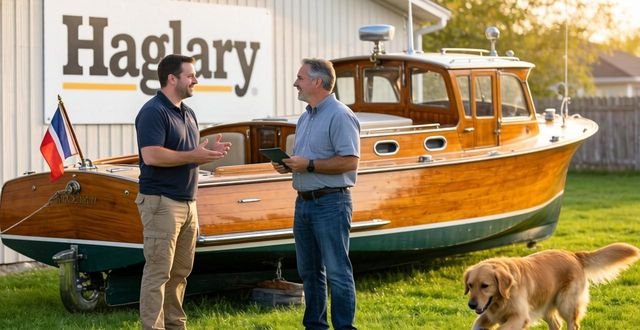
Up in the Great Lakes region – Michigan, Ohio, Wisconsin – you’ll see a different pattern. Hagerty is famous for classic cars, but they also insure vintage wooden boats and antique runabouts. For everyday bowriders, though, Nationwide has a tight grip. Their “Agreed Value Plus” policy includes on‑water towing and roadside assistance for the trailer. Why does that matter? Because I once blew a trailer tire near Sandusky, Ohio, and Nationwide sent a truck within an hour. Try getting that from a discount online broker. Also, in Michigan, Auto‑Owners Insurance writes some of the cleanest boat policies for the Upper Peninsula – think low traffic, high risk of submerged logs. Their “wreck removal” limit is higher than state requirements, which saves you if a storm pushes your boat onto a rock pile.
Don’t ignore regional mutuals. In Washington and Oregon, PEMCO’s boat policies are worth a look, especially for sailboats. They offer “mast and rigging” coverage that most national carriers treat as an afterthought. And in the Northeast – Massachusetts to Maine – Plymouth Rock Assurance has a niche for lobster boat conversions and downeast cruisers. Their claims adjusters actually know what a hauler is. That local knowledge changes everything when you’re filing after a nor’easter.
So how do you find the top company for your state? Start with your state’s department of insurance website. Look for complaint ratios. A big name like Geico might be cheap in Arizona but impossible to reach after a Florida lightning strike. Then call a local marine surveyor – not an agent. Surveyors see which insurers pay quickly and which argue over every scratch. I’ve done this three times, and every surveyor gave me the same two names for my region.
One more thing: don’t marry your policy. Rates and coverage shift every year. What’s best in Georgia this spring might be overtaken by a regional carrier in the fall. I switch every 18 to 24 months, and I always check if a company has in‑state claims offices. Because when your engine floods on the Fourth of July, you don’t want a 1‑800 number that routes to a call center in another time zone.
Bottom line? The “top” boat insurance company isn’t a national trophy. It’s the one that understands your local waterway, your storm season, and your tow boat operator’s phone number. Start with the state‑by‑state leaders I mentioned, then ask a neighbor who actually files claims. That’s how real boaters do it.


Leave a Reply