Introduction to Insurance by State in the U.S.
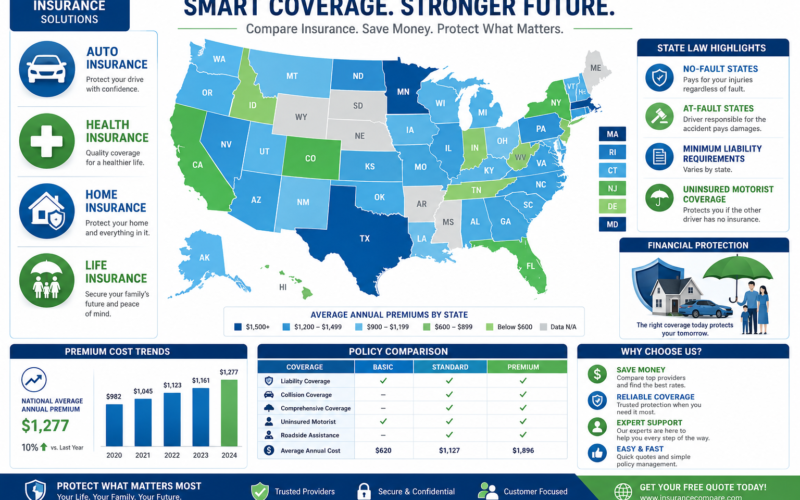
Insurance in the United States is not uniform. Whether you are looking at auto insurance, health insurance, home insurance, or renters coverage, each state has its own rules, pricing structures, and minimum requirements. This creates significant differences in how much people pay and what protection they receive depending on where they live.
Understanding insurance by state comparisons is essential for individuals, families, and businesses trying to make informed financial decisions. In 2026, rising costs, updated regulations, and regional risk differences make state-level insurance comparisons more important than ever.
Why Insurance Varies by State
Insurance companies calculate risk differently in each state. Several key factors influence pricing and coverage rules.
1. State Laws and Regulations
Each state has its own insurance department that sets:
- Minimum coverage requirements
- Consumer protection rules
- Filing and approval standards for insurers
2. Population Density
Urban states tend to have higher premiums due to:
- Increased traffic accidents
- Higher theft rates
- More frequent insurance claims
3. Weather and Natural Disasters
States prone to hurricanes, wildfires, floods, or tornadoes usually have higher insurance costs.
Examples:
- Florida: hurricanes
- California: wildfires and earthquakes
- Midwest states: tornado risk
4. Healthcare and Repair Costs
Medical costs and vehicle repair costs vary significantly by region, affecting both health and auto insurance premiums.
5. Legal Environment
States with higher lawsuit rates or higher settlement averages tend to have higher liability insurance costs.
Auto Insurance by State
Auto insurance is one of the most regulated types of insurance in the U.S.
Minimum Requirements Vary by State:
Each state sets its own liability minimums. For example:
- Some states require low minimum coverage
- Others require higher liability limits or additional coverage types
High-Cost States:
- Michigan
- Florida
- Louisiana
- California
Lower-Cost States:
- Ohio
- Iowa
- Idaho
- Maine
Key Cost Drivers:
- Accident frequency
- Uninsured drivers
- Weather conditions
- Repair costs
Health Insurance by State
Health insurance in the U.S. is influenced by both federal and state-level rules.
Key Differences Include:
1. Marketplace availability
States may use:
- Federal marketplace (HealthCare.gov)
- State-based exchanges
2. Medicaid expansion
Some states expanded Medicaid coverage, increasing access and reducing uninsured rates.
3. Premium variations
Health insurance costs differ due to:
- Hospital pricing
- State regulations
- Population health conditions
Expensive Health Insurance States:
- Alaska
- Wyoming
- West Virginia
More Affordable States:
- Minnesota
- Massachusetts
- Vermont
Homeowners Insurance by State
Home insurance is heavily affected by climate risk and property values.
High Premium States:
- Florida (hurricanes and flooding)
- California (wildfires)
- Texas (storms and hail)
- Louisiana (flooding and hurricanes)
Lower Premium States:
- Vermont
- Oregon
- Utah
- Wisconsin
Coverage Differences:
Some states require additional endorsements such as:
- Flood insurance (coastal areas)
- Earthquake coverage (West Coast)
Renters Insurance by State
Renters insurance is generally more affordable but still varies by state.
Average Cost Range:
- $10 – $30 per month nationally
Key State Differences:
- Higher in urban states like New York and California
- Lower in rural Midwestern states
Coverage Includes:
- Personal property protection
- Liability coverage
- Temporary living expenses
Factors That Influence State Insurance Costs
Across all types of insurance, several common factors determine cost differences:
1. Risk exposure
Natural disasters and crime rates significantly affect premiums.
2. State regulations
Some states tightly regulate insurance pricing, while others allow more flexibility.
3. Claim frequency
More claims in a state generally lead to higher premiums.
4. Cost of living
Higher cost of living states typically have higher insurance premiums.
Most Expensive Insurance States (Overall Trend)
While rankings vary by insurance type, the following states often appear at the top:
- California
- Florida
- New York
- Louisiana
- Michigan
These states tend to combine high population density, climate risks, and higher service costs.
Most Affordable Insurance States
States with lower overall insurance costs often include:
- Idaho
- Iowa
- North Dakota
- Wisconsin
- Maine
These states typically have:
- Lower population density
- Fewer natural disasters
- Lower claim rates
How to Compare Insurance by State Effectively
When comparing insurance across states, consider:
1. Coverage requirements
Minimum legal requirements vary widely.
2. Total cost vs coverage value
Cheaper premiums may mean lower protection.
3. Local risk factors
Weather and crime rates matter more than national averages.
4. Insurance provider availability
Not all insurers operate in every state.
5. Deductibles and limits
Always compare out-of-pocket costs, not just premiums.
Why State-Level Insurance Comparison Matters
Understanding insurance differences by state helps consumers:
- Avoid overpaying for coverage
- Choose better protection plans
- Prepare for relocation costs
- Understand legal requirements
- Reduce financial risk exposure
For businesses and families moving between states, these differences can significantly impact budgets.
Future Trends in U.S. Insurance by State
Insurance regulation continues to evolve due to:
- Climate change increasing natural disaster risks
- Rising healthcare and repair costs
- AI-based risk pricing models
- State-level policy reforms
- Increased digital insurance platforms
In the future, pricing may become more personalized, but state-level differences will still remain significant.
Conclusion
Insurance by state in the U.S. varies widely in terms of coverage requirements, costs, and risk exposure. Whether you are comparing auto, health, home, or renters insurance, understanding state-level differences is essential for making informed financial decisions.
In 2026, with rising costs and changing regulations, comparing insurance across states is no longer optional—it is a critical step in financial planning.



Leave a Reply