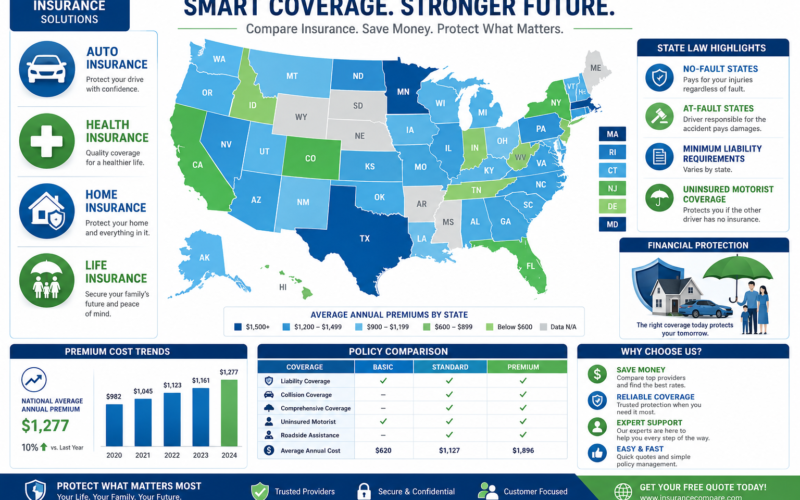
Insurance in the United States is not a one-size-fits-all system. Each state has its own regulations, pricing structures, minimum coverage requirements, and market conditions that directly influence how much consumers pay for auto, health, home, and life insurance.
Understanding these differences is essential for individuals and families who want to make informed financial decisions. A driver in California may pay significantly different auto insurance premiums than someone in Texas. A homeowner in Florida faces different risks than a homeowner in Ohio. Even health insurance availability can vary depending on state-level marketplace rules and Medicaid expansion policies.
This guide provides a comprehensive overview of how insurance works across different U.S. states, what factors affect pricing, and why location plays such a critical role in real-world insurance costs in 2026.
Why Insurance Varies by State
Insurance pricing and coverage rules differ across states due to several key factors:
1. State Regulations
Each state has its own Department of Insurance that regulates:
- Minimum coverage requirements
- Rate approval systems
- Consumer protection laws
- Claims handling rules
Some states tightly regulate premiums, while others allow more flexibility for insurers.
2. Population Density and Traffic Risk
Auto insurance rates are heavily influenced by:
- Urban congestion
- Accident frequency
- Vehicle theft rates
- Road safety statistics
For example, densely populated states like New York and California typically have higher premiums than rural states.
3. Weather and Natural Disasters
Home insurance costs are significantly impacted by environmental risk:
- Hurricanes (Florida, Louisiana)
- Tornadoes (Texas, Oklahoma)
- Wildfires (California, Colorado)
- Winter storms (Northern states)
Higher risk leads to higher premiums.
4. Healthcare Systems and Policies
Health insurance availability and pricing are influenced by:
- Medicaid expansion status
- State-run ACA marketplaces
- Hospital pricing differences
- Regional healthcare provider costs
Auto Insurance by State
Auto insurance is mandatory in almost every U.S. state, but minimum requirements vary widely.
Key Coverage Types
Most states require:
- Bodily injury liability
- Property damage liability
- Uninsured/underinsured motorist coverage (in some states)
Optional coverages include:
- Collision insurance
- Comprehensive insurance
- Personal injury protection (PIP)
States with Higher Auto Insurance Costs
Typically higher-cost states include:
- Michigan
- California
- Florida
- New York
Reasons include:
- High population density
- Fraud rates
- Expensive vehicle repair costs
- Litigation frequency
Lower-Cost Auto Insurance States
More affordable states often include:
- Idaho
- Iowa
- Maine
- Ohio
These states generally have:
- Lower accident rates
- Less traffic congestion
- Lower repair costs
Health Insurance by State
Health insurance in the U.S. is regulated at both federal and state levels, leading to significant variation.
ACA Marketplace Differences
Each state may operate:
- A state-run marketplace
- A federally facilitated marketplace (HealthCare.gov)
- A hybrid system
Medicaid Expansion Impact
States that expanded Medicaid generally provide:
- Lower uninsured rates
- Broader coverage access
- Reduced out-of-pocket costs for low-income residents
States that did not expand Medicaid often have:
- Higher uninsured populations
- More coverage gaps
Real-World Cost Differences
Health insurance premiums vary based on:
- Age
- Income level
- ZIP code
- Provider networks
- State regulations
For example, premiums in Alaska or Wyoming may differ significantly from those in Texas or Georgia due to provider availability and population density.
Home Insurance by State
Home insurance is strongly influenced by environmental risks and rebuilding costs.
Key Coverage Areas
Standard home insurance typically includes:
- Dwelling coverage
- Personal property protection
- Liability coverage
- Loss of use coverage
High-Risk States
States with higher home insurance premiums include:
- Florida (hurricanes)
- California (wildfires)
- Texas (storms and hail)
- Louisiana (flooding and hurricanes)
Lower-Risk States
More affordable home insurance is often found in:
- Vermont
- Utah
- Oregon
- Wisconsin
These states typically have fewer catastrophic weather events.
Life Insurance by State
Unlike auto or home insurance, life insurance is less affected by geography but still shows some variation.
Factors Affecting Life Insurance Rates
- Age
- Health condition
- Smoking status
- Occupation
- Policy type (term vs whole life)
State-Level Differences
While life insurance is more standardized, differences may still appear due to:
- Cost of healthcare
- Average life expectancy
- Insurance competition levels
States with strong insurance markets often offer more competitive pricing and product options.
Real-World Insurance Cost Comparison
To understand how dramatically insurance varies, consider the following general patterns:
- A driver in Michigan may pay 2–3x more than a driver in Maine
- A homeowner in Florida may pay 4–5x more than in Utah
- Health insurance premiums can differ by hundreds of dollars monthly depending on ZIP code
- Life insurance differences are usually smaller but still noticeable
These variations highlight the importance of comparing insurance providers within your specific state.
How to Choose Insurance in Your State
When selecting insurance, consumers should:
1. Compare Multiple Providers
Different insurers evaluate risk differently.
2. Understand State Minimum Requirements
Minimum coverage is often not enough for full protection.
3. Consider Bundling Policies
Bundling auto + home insurance can reduce costs.
4. Review Local Risk Factors
Weather, crime rates, and traffic conditions matter.
5. Check State Insurance Department Resources
Many states provide consumer guides and rate comparison tools.
Insurance Trends Across U.S. States in 2026
Several trends are shaping the insurance market:
Rising Premiums Nationwide
Inflation, repair costs, and healthcare expenses continue to push prices upward.
Climate Risk Impact
States affected by climate change are seeing rising home insurance costs.
Digital Insurance Platforms
More consumers are purchasing insurance online with instant quotes.
AI-Based Risk Pricing
Insurers increasingly use data analytics to personalize pricing.
Conclusion
Insurance in the United States is deeply influenced by state-level regulations, environmental risks, healthcare systems, and local economic conditions. Whether you are purchasing auto, health, home, or life insurance, your location plays a major role in determining coverage options and real-world costs.
Understanding these differences helps consumers make smarter financial decisions and choose the right protection for their specific needs. In 2026, comparing insurance by state is more important than ever as pricing and risk factors continue to evolve.



Leave a Reply