Why does one coastal homeowner pay three times as much as another just a few states away?
You have probably stared at your premium quote and wondered if the algorithm just flipped a coin.
The truth is more layered than a nor’easter in November.
Let us begin with Florida, the undisputed heavyweight of beach house insurance puzzles.
Here, wind mitigation reports are practically a second religion, and your roof’s age matters more than its square footage.
A 2025 industry data set from the Insurance Information Institute showed that Florida’s average annual premium for a $500,000 beach house hovered near $6,200, while a similar property in Virginia barely scratched $1,900.
What explains that chasm?
The answer lives not only in hurricane history but also in litigation frequency, reinsurance costs, and how aggressively a state’s regulators allow pricing.
Move west to the Gulf Coast, and you encounter Louisiana and Texas sharing a similar appetite for windstorm exposure but entirely different insurance diets.
Louisiana’s insurer of last resort, the Louisiana Citizens Property Insurance Corporation, has seen policy counts swell like a high tide after a series of small carriers failed.
Texas, by contrast, leans on a more competitive private market, though the Texas Windstorm Insurance Association still backs the most exposed coastal bend.
One homeowner in Galveston told a local news outlet last year that their premium jumped forty percent after a single tropical storm warning without any damage filing.
That is the new normal when climate models and actuarial tables start dating.
What about the Carolinas, where history whispers of Hugo and Hazel?
North Carolina’s Beach Plan offers wind and hail coverage for the barrier islands, but the rates are tiered by distance from the shore.
A house in Kitty Hawk pays less than a house in Cape Hatteras, yet both obey the same truth: flood insurance remains separate, a frustrating footnote that every new buyer discovers too late.
South Carolina follows a similar script but with a gentler pace, as its Wind and Hail Underwriting Association steps in only where private carriers flee.
You might ask whether any state offers a sweet spot where cost and coverage shake hands without flinching.
Delaware and Maryland present that quieter answer.
Their beach house insurance premiums rarely trigger sticker shock, partly because their coastline faces fewer direct hits and partly because their building codes evolved earlier.
A 2024 risk assessment from NOAA noted that the Mid-Atlantic’s sea level rise is matched by stricter elevation requirements, which in turn keep insurance claims lower.
So a beach house in Bethany Beach can cost less to insure than a similar property in Myrtle Beach, even though they share the same ocean.
Now turn your gaze to the Pacific, where California’s beach house insurance story diverges sharply from the Atlantic narrative.
Here, wildfire risk often overshadows wave action, and a blufftop home in Malibu worries more about embers than storm surge.
The FAIR Plan,California’s residual market, has become the de facto carrier for many coastal properties after major insurers pulled back from writing new policies in high-risk zip codes.
Yet a beach house near San Diego might still find a surplus line carrier willing to talk, provided the owner retrofits with fire-resistant materials and clears vegetation within five feet.

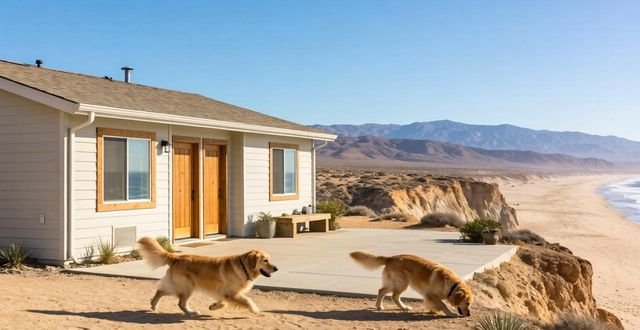
The golden state teaches us that “beach house” can mean desert-adjacent cliffs as much as sandy shores, and insurance follows the threat, not the view.
What about the Northeast, where history and hurricanes collide in places like Cape Cod and Long Island?
Massachusetts offers a surprisingly stable market, with many beach houses still covered by regional mutual insurers that have weathered a century of storms.
New York, especially after Superstorm Sandy redrew the flood maps, now layers federal, state, and private coverage like a wedding cake of bureaucracy.
A beach house in Fire Island might carry a National Flood Insurance Program policy, a wind-only policy from the New York Property Insurance Underwriting Association, and a wraparound difference in conditions policy to fill the gaps.
That stacking strategy is not elegant, but it works, and seasoned owners accept it the way sailors accept barnacles.
We have not yet spoken of Alabama and Mississippi, which often get overlooked in coastal discussions.
Their premiums fall somewhere between the Carolinas and Florida, but their loss history tells a quieter story.
Both states participated in the Gulf Coast renaissance after Katrina, strengthening building codes and elevating structures until the insurance math began to soften.
A beach house in Gulf Shores or Biloxi today might cost two-thirds of what a Floridian neighbor pays, even with identical construction.
Why the difference?
Because each state’s insurance department negotiates different rates with the same national carriers, and those negotiations hinge on local litigation climate, claims histories, and political will.
The data does not lie: Florida accounted for nearly seventy-nine percent of all homeowners insurance lawsuits nationwide in 2023, according to the Florida Justice Reform Institute, and that statistic alone explains much of the premium gap.
But you do not need a law degree to act on this information.
When you shop for beach house insurance by state, your first step is not clicking “get a quote” but pulling the elevation certificate and wind mitigation report from the seller or the county records.
Those two documents shift the conversation from abstract risk to measurable facts.
Next, check whether your state’s residual market offers a competitive rate once you exceed private carrier thresholds.
Many homeowners discover that the beach plan or FAIR plan is not a punishment but a pragmatic solution, especially for older homes that do not fit modern underwriting models.
Then ask about buybacks on wind or hail deductibles, which some states allow as an endorsement that lowers your out-of-pocket exposure before a named storm even forms.
The homeowners who master this system treat insurance as a puzzle, not a nuisance.
They swap stories about which carrier writes in which zip code the way surfers share where the waves break best.
And yes, they still get shocked by renewals sometimes, because reinsurance prices change globally, and a bad monsoon season in Asia can raise your premium in Ocean City, Maryland.
That is the hidden thread weaving through every state’s beach house insurance market: we are all connected by the same atmospheric and financial currents.
So the next time someone tells you insurance by state is just a bureaucratic quirk, remind them that a beach house in Texas and a beach house in Connecticut face different perils but the same universal rule.
Understand your local hazard, document your home’s defenses, and never assume the first quote is the only truth.
The coast will keep calling, as it always has, and a smart insurance strategy is simply the anchor that lets you answer without fear.




Leave a Reply